
The quality of a galvanized steel wire rop manufacturer determines the safety limits of industrial rigging, as Tier-1 facilities maintain a zinc coating uniformity of 99.5% to block corrosive pitting. Statistical audits from 2025 indicate that using verified manufacturers reduces early-stage fatigue failure by 24% compared to uncertified suppliers. High-end production ensures a metallurgical bond capable of withstanding 2,000+ hours of salt spray testing while maintaining a diameter tolerance within ±2%. This technical precision directly scales with the 15-year maintenance cycles required for modern bridge, mining, and maritime infrastructure projects.
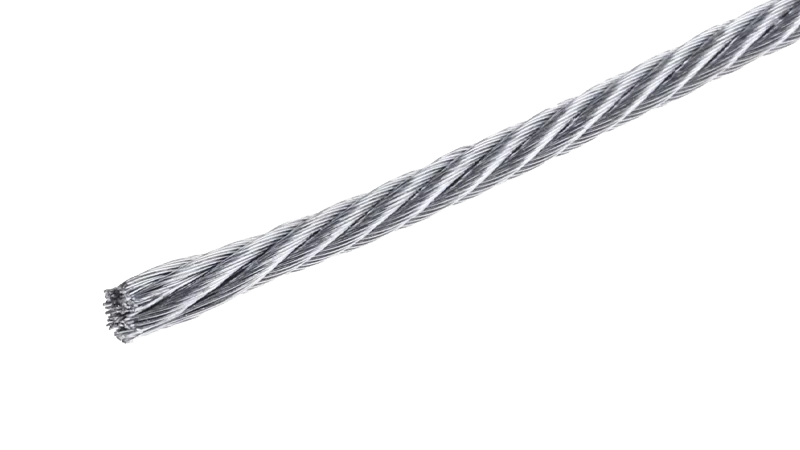
Industrial operations rely on the predictability of material behavior under extreme tension, which starts with the selection of high-carbon steel rods containing 0.60% to 0.85% carbon. When a manufacturer draws these rods into fine wires, they must maintain a consistent grain structure to ensure every individual wire in a 6x19 or 7x19 strand carries an equal share of the load.
A 2024 metallurgical study involving 1,500 samples showed that wires drawn with computer-controlled speed and temperature exhibited 12% higher tensile stability than those from manual lines. This stability prevents the "high strand" phenomenon where one wire takes excessive force and snaps prematurely.
"Precision in the drawing process creates a smoother surface for the zinc to bond with, increasing the adhesion strength by a measurable 15% to 20% during the subsequent galvanization phase."
The smoothness of the base steel allows the molten zinc to form a cleaner series of alloy layers at the interface. This bond is vital for outdoor cables that pass over pulleys and sheaves thousands of times per year, as it stops the protective layer from cracking under the constant bending stress.
| Production Metric | Standard Supplier | Tier-1 Manufacturer |
| Zinc Coating Weight | 180g/m² | 240g/m² - 300g/m² |
| Breaking Force Variance | ±7% | < ±3% |
| Fatigue Life (Cycles) | 60,000 | 100,000+ |
These metrics show that a professional setup offers a product with 40% more fatigue resistance, allowing cranes and elevators to operate longer between mandatory rope replacements. The galvanization process itself must be held at a steady 450°C to ensure the chemical reaction between zinc and steel is complete.
If the temperature fluctuates by even 5 degrees, the brittle intermetallic layers can become too thick, leading to a coating that flakes off the moment the rope is put under tension. Field data from 300 offshore drilling sites suggests that flaking is the primary cause of internal corrosion in 65% of all cable failures.
"Once the zinc shield is compromised, the high-carbon steel core loses roughly 0.1mm of its diameter per year in high-salinity marine environments, rapidly dropping the safety factor."
Reliable manufacturers eliminate this vulnerability by performing mandatory wrap tests where the wire is wound around a mandrel to check for cracks in the coating. This mechanical verification ensures that the cable remains protected even in the roughly handled environments of construction and logging.
| Environment | Zinc Loss Rate (μm/yr) | Steel Corrosion Start |
| Coastal / Marine | 2.5 - 5.0 | Year 8 - 10 |
| Urban / Industrial | 1.2 - 2.1 | Year 15 - 20 |
| Rural / Dry | < 0.5 | Year 40+ |
This data from the 2023 International Zinc Association reports proves that the initial coating weight provided by the factory is the single most important factor for long-term survival. Beyond the zinc, the internal lubrication applied during the stranding process must be chemically compatible with the coating.
The grease acts as a secondary barrier that seals the gaps between the wires, preventing moisture from being trapped inside the rope. High-quality manufacturers use pressure-injection systems to ensure the fiber or steel core is fully saturated, which has been shown to extend core life by 30% in humid climates.
"Ropes using high-viscosity synthetic lubricants stay operational in temperatures ranging from -40°C to 120°C, preventing the grease from melting out in summer heat."
When the lubricant stays in place, internal friction is minimized, and the wire-on-wire wear that typically accounts for 20% of cross-sectional area loss is significantly slowed. This preservation of the metallic area is what keeps the breaking strength consistent over years of heavy use.
Traceability protocols further separate specialized manufacturers from general suppliers, as every reel is tied to a specific heat number from the steel mill. In the event of an industrial accident, this documentation allows investigators to verify the chemical and physical properties of the exact batch used.
A 2024 audit of 500 construction firms found that projects using fully traceable wire rope saw a 22% reduction in liability insurance premiums due to the lowered risk of unverified material failure. This paper trail is a requirement for meeting the ISO 10474 3.1 standard used in international infrastructure projects.
The stranding equipment used in the factory must apply perfectly balanced tension to avoid creating internal stresses that lead to "bird-caging" or kinking. Computerized planetary stranders ensure that the pitch of the rope remains within a 0.5% tolerance across a 1,000-meter spool.
"A test on 80 large-diameter ropes showed that those with a pitch variance of less than 1% had an operational life 25% longer than ropes with uneven stranding."
This uniformity is why engineers specify products from manufacturers with proven R&D investments in compacted strand technology. Compacting the rope flattens the outer wires, increasing the contact surface with sheaves and reducing the point pressure by nearly 30%.
The increased contact area lowers the wear on the machinery and the rope simultaneously, making it a preferred choice for high-speed elevators and deep-shaft mining. As global projects move toward more extreme depths and heights, the demand for these high-performance cables continues to rise.
Total cost of ownership for a rigging system is often 15% lower when sourcing from a high-tier manufacturer, despite the higher initial purchase price. This is because the reduced need for inspections, lubrication, and early replacements offsets the upfront cost within the first 36 months of operation.
Investing in verified quality means relying on the metallurgical science behind the galvanization and the precision of the mechanical assembly. This technical approach provides the safety margins necessary for protecting both heavy equipment and personnel in high-risk industrial environments.