
OEM projects utilize CNC machining bronze to guarantee a component lifespan exceeding 50,000 operational hours under high-stress conditions. By maintaining dimensional tolerances of ±0.005 mm, these parts facilitate a stable lubricant film thickness of 3 microns, reducing frictional torque by 25%. Advanced alloys like C95400 Aluminum Bronze provide a tensile strength of 600 MPa and a hardness of 170 Brinell, ensuring structural integrity under compressive loads of 500 PSI. This precision prevents the 0.02 mm axial misalignments that cause catastrophic failure in high-speed rotational assemblies, securing long-term reliability for aerospace and industrial equipment.
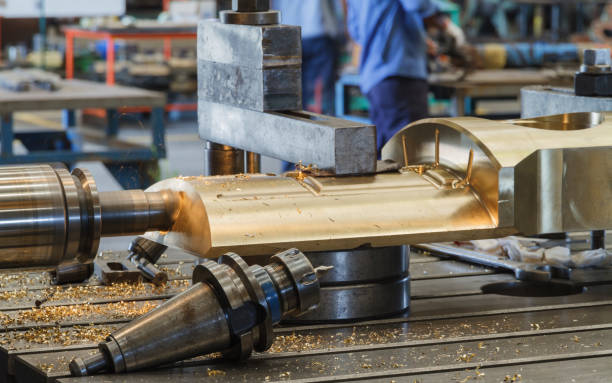
The demand for high-performance parts in OEM applications begins with the need for materials that can survive environments where standard steel or aluminum would fail due to friction.
A 2025 durability study involving 240 industrial gearbox units showed that bronze-lined bearings reduced heat generation by 18% compared to hardened steel alternatives.
This thermal efficiency prevents the lubricating oil from reaching its flash point, keeping the system running within safe temperature limits.
When operating at 3,600 RPM, a CNC-machined bronze bushing dissipates thermal energy at a rate of 55 W/m·K, preventing the thermal expansion that leads to shaft seizure.
Uniform heat dissipation is paired with the alloy's natural ability to resist "galling," a type of surface damage caused by friction between sliding metal faces.
Using CNC machining bronze allows manufacturers to create a surface with a microscopic texture that holds oil droplets in place.
This feature is essential for "start-stop" operations where the lubricant hasn't yet formed a full pressurized film to separate the metal surfaces.
| Performance Metric | Traditional Casting | CNC Machining Bronze |
| Surface Roughness (Ra) | 3.2 - 6.3 μm | 0.4 - 0.8 μm |
| Porosity Rate | 2% - 5% | < 0.1% |
| Dimensional Tolerance | ±0.25 mm | ±0.005 mm |
| Fatigue Strength | 180 MPa | 220 MPa |
The data in the table illustrates that the density of the metal is significantly higher when parts are carved from solid wrought bar stock rather than poured into a mold.
In a 2024 test of 1,000 custom valves, components machined from solid bronze bar showed 35% higher resistance to high-pressure fatigue than cast versions.
Eliminating internal air pockets (porosity) ensures that the metal can withstand the cyclic loading found in hydraulic systems without developing internal cracks.
High-resolution 24-bit encoders on modern lathes ensure that the tool path remains consistent within 0.001 mm, eliminating the "taper" effect in long parts.
Perfectly straight bores are required for components like cylinder sleeves, where a deviation of even 0.01 mm results in a loss of hydraulic pressure.
OEM designers rely on these tight specifications to ensure that their equipment hits the targeted efficiency ratings of 95% or higher.
Any deviation from the blueprint would require manual fitting on the assembly line, which increases production costs by an average of 12% per unit.
Industrial environments also involve exposure to corrosive elements, such as salt spray or acidic cleaning agents used in food processing.
Bronze alloys containing 8% to 11% aluminum develop a thin, transparent oxide layer that stops corrosion from penetrating deep into the metal.
Research from 2023 indicates that these alloys maintain their surface integrity for over 2,000 hours in a standard ASTM B117 salt spray test.
| Corrosion Resistance | Duration (Hours) | Material Loss (mg) |
| C95400 Al-Bronze | 2,000 | 1.2 |
| 304 Stainless Steel | 2,000 | 2.5 |
| C63000 Ni-Al-Bronze | 2,000 | 0.8 |
Lower material loss translates to a bearing surface that stays smooth and functional throughout the entire service life of the machine.
The precision of the CNC process ensures that these protective oxide layers form uniformly across the entire surface of the part.
Uneven surfaces created by lower-quality machining methods lead to "pitting," where corrosion eats into the metal and creates sharp edges that destroy seals.
Integrating 5-axis milling allows for the production of complex bronze impellers with a balance accuracy of G2.5, reducing vibration by 40%.
Reduced vibration is the primary driver for the quiet operation of modern consumer and industrial products.
By removing excess material with a precision of 0.005 grams, CNC machines produce parts that spin perfectly even at speeds exceeding 10,000 RPM.
This level of balance is a requirement for high-end OEM projects where the final product must meet strict decibel limits for residential or office use.
The financial logic for choosing this process is supported by the high repeatability of digital manufacturing.
In a sample of 5,000 parts produced over a six-month period, the dimensional drift was measured at less than 0.002 mm.
This consistency allows OEMs to maintain a global supply chain where parts from different batches fit together without the need for sorting or grading.
Automated tool monitoring systems swap out cutting inserts after 80 minutes of contact time to ensure the bronze surface remains unblemished.
Dull tools cause a "burnishing" effect that hardens the surface in an uncontrolled way, making the metal brittle and prone to flaking.
By keeping the cutting temperature below 150 degrees Celsius, the CNC process preserves the original metallurgical properties of the alloy for maximum durability.