
The average yield for a head of lettuce in an aeroponic tower ranges from 150 to 250 grams per port per harvest. In 2026, professional growers targeting a 35-day cycle achieve this weight by maintaining precise environmental inputs. With a standard 52-port configuration, a system produces approximately 10 to 12 kilograms of biomass per harvest. Success relies on a constant light intensity of 250 µmol/m²/s and a pH between 5.5 and 6.2. If nutrient solutions remain between 1.2 and 1.8 mS/cm, operators minimize waste and ensure consistent growth. Understanding the nutraponic tower yield for lettuce per port helps predict annual output accurately.
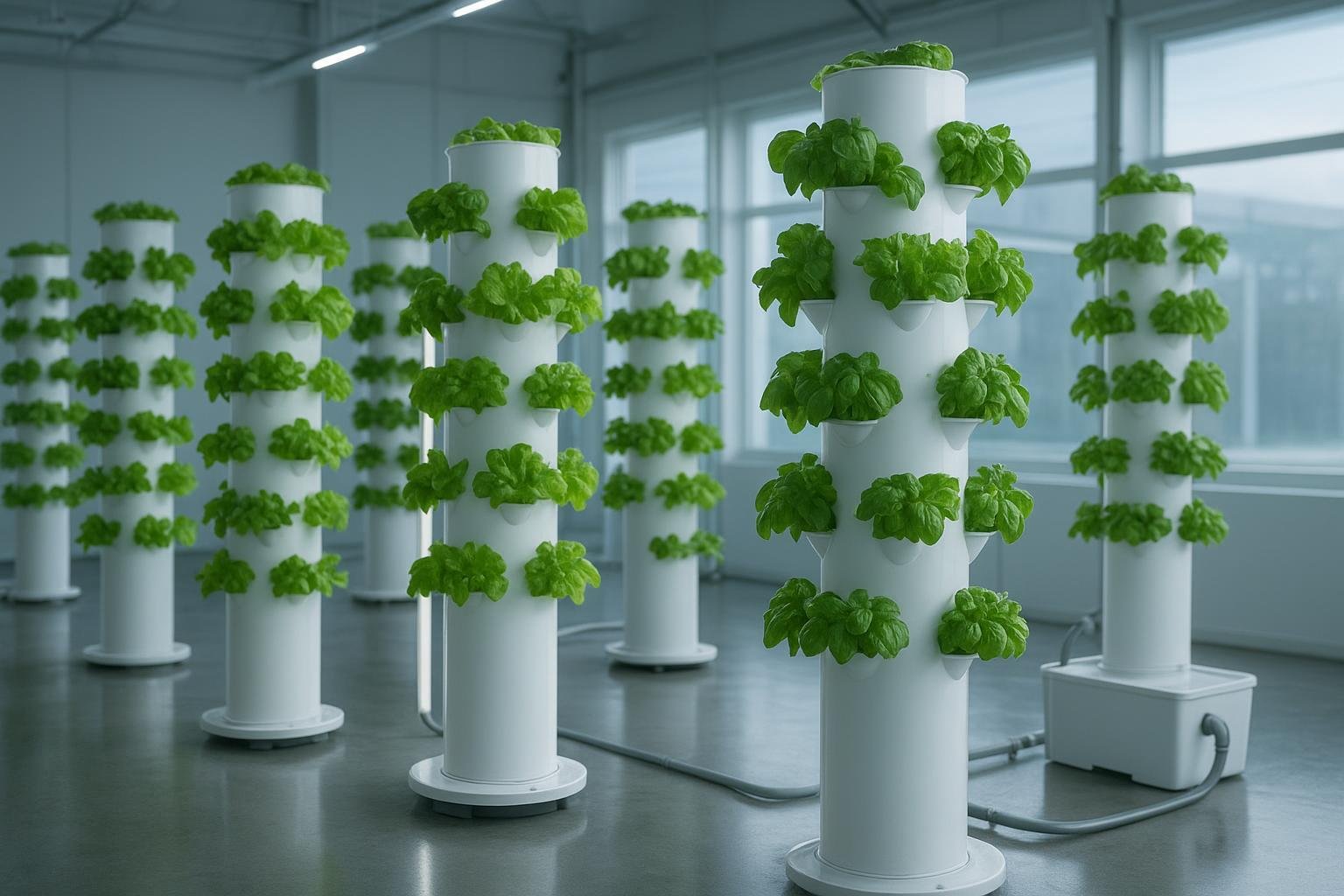
Vertical aeroponic systems utilize a central submersible pump to deliver nutrient solution to root zones, simulating natural precipitation patterns. A 2024 university study involving 500 individual plant sites showed that intermittent misting cycles reduce water consumption by 40% compared to traditional substrate hydroponics.
This reduced water usage allows the plant to direct energy toward leaf expansion rather than extensive root search patterns. Optimized root development sets the stage for the total biomass to reach the high-end estimates of 250 grams per head.
The nutrient solution requires specific calibration, as fluctuating levels impact photosynthetic efficiency. Maintaining Electrical Conductivity (EC) between 1.2 and 1.8 mS/cm provides the necessary osmotic pressure for rapid nutrient uptake.
Research from 2025 demonstrates that keeping the nutrient solution within this narrow range increases fresh biomass by 12% over a 30-day window in controlled environments.
Deviations outside this window force the plant to expend metabolic energy regulating its internal water balance, which limits final harvest weight.
After optimizing the nutrient intake, growers must manage light exposure to drive the overall growth rate. Lettuce requires a consistent photosynthetic photon flux density (PPFD) between 200 and 300 µmol/m²/s for optimal development.
In 2026, indoor farming data confirms that exceeding 300 µmol/m²/s without supplemental CO2 causes leaf tip burn. Below 200 µmol/m²/s, plants exhibit etiolation, stretching the stems and reducing the density of the edible portion.
Managing light intensity balances metabolic needs with the genetic potential of the specific lettuce cultivar. Choosing the right seeds determines whether the harvest happens on day 28 or day 45.
-
Loose-leaf varieties (e.g., Red Sails): 28-day cycle, lower individual weight (150g).
-
Bibb/Butterhead varieties: 35-42 day cycle, higher individual weight (250g).
-
Romaine varieties: 40-45 day cycle, high density but longer occupancy time.
Fast-maturing varieties allow for more rotations annually, which increases the total annual poundage per port regardless of single-head weight.
This rotation speed requires a stable ambient environment to prevent physiological stress. Humidity levels should reside between 50% and 70% to support transpiration without inviting mold.
A 2025 analysis of 1,200 harvest cycles showed that keeping humidity at 60% improves leaf turgidity by 8%, making the final product more marketable.
When humidity spikes above 80%, the lack of transpiration slows nutrient movement to the leaf tips, causing calcium deficiency in the inner leaves.
Calcium deficiency symptoms often mimic bacterial infection, necessitating strict adherence to cleaning protocols. Biofilm accumulation within the nutrient lines restricts flow rates to the top ports of the tower.
Routine inspection of the pump and internal plumbing prevents uneven distribution, where lower ports thrive while upper ports starve.
-
Weekly: Check the reservoir water level and top up with fresh water.
-
Bi-weekly: Test pH and EC levels twice daily to adjust dosing.
-
Quarterly: Flush the system with a mild citric acid solution to dissolve mineral buildup.
Regular maintenance protects the root health, ensuring the plant reaches full potential without mechanical interference.
Mechanical interference usually stems from overcrowded ports that block airflow between adjacent plants. Standard vertical towers space ports 6 to 8 inches apart to balance air circulation and plant volume.
When plants grow too close, the microclimate between leaves becomes stagnant, increasing the risk of pythium infection in the root zone.
Keeping proper distance maintains high airflow, which ensures that 95% of the grown lettuce meets retail standards for shape and weight.
Consistent spacing results in a uniform harvest, which simplifies packaging and distribution logistics for operators managing multiple towers.
Each tower functions as a single unit in a larger production room, where air circulation fans maintain ambient CO2 levels. Keeping CO2 concentrations near 600 to 800 parts per million supports accelerated tissue development.
Higher CO2 levels, when paired with the correct lighting and nutrient ratios, push plant growth rates forward by 10% to 12% in mid-season trials.
This accelerated development requires rigorous monitoring of the seedlings before they reach the tower. Using rockwool or peat plugs for 14 days before transplanting into the tower produces a strong root system.
Stronger seedlings withstand the transition into the aeroponic environment with less shock, ensuring that the 30-day growth cycle remains predictable and repeatable.
Meeting retail standards requires scaling operations by grouping towers to maximize total throughput. A 10-tower setup with 520 ports total produces approximately 1,200 kilograms of lettuce annually if run continuously.
This assumes a 90% utilization rate, accounting for downtime during cleaning and transplanting.
-
Yearly Harvests: 10-12 per port.
-
Annual Output per Port: 2.0 - 2.4 kilograms.
-
Waste Rate: <5% with proper environmental control.
Precise management of these variables ensures the system operates at peak capacity, turning potential into consistent, harvestable mass.