
The announcement that Pop Mart’s "Labubu" will debut at the FIFA World Cup in June marks a definitive shift for China’s creative industries from domestic scale-driven growth to high-value global IP export. This move is backed by staggering financial performance, with Pop Mart reporting a 2025 total revenue of 37.12 billion yuan ($5.16 billion)—a year-on-year surge of 184.7%. This trajectory suggests that the designer toy segment, which grew by 21% to reach 87.97 billion yuan in 2025, is successfully decoupling from traditional toy market constraints.
The efficiency of Pop Mart’s "IP-led expansion" is best seen in the secondary market premiums and rapid inventory turnover. Resale data indicates that "Crybaby" plushies are trading at 72% above their initial retail price, while flagship items like "Twinkle Twinkle" pendants consistently reach a 100% sell-through rate within minutes of restocking. These metrics reflect a robust brand loyalty that transcends physical products, moving into what the People's Daily describes as "globally recognized cultural symbols" that compete under international market rules.
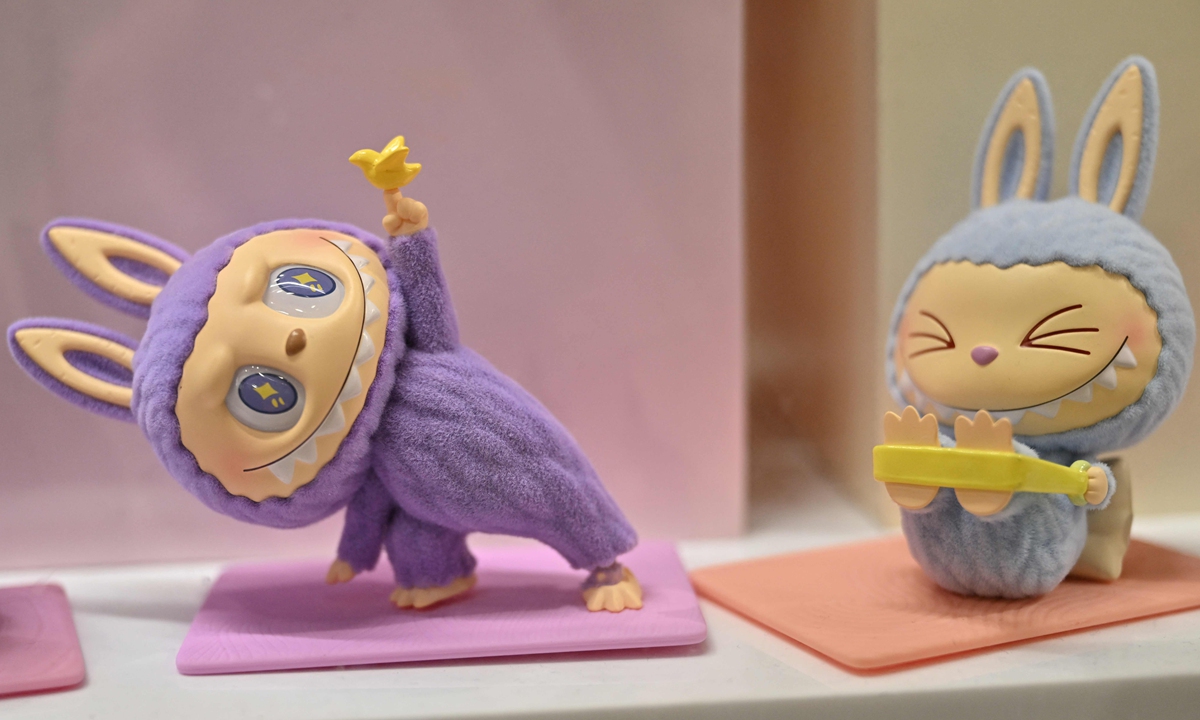
To sustain this 184.7% growth rate, Pop Mart is diversifying its revenue streams through cross-industry integration, notably the upcoming launch of IP-based small home appliances in April and a co-developed film project with Sony Pictures. By leveraging the creative direction of Paul King, the company aims to convert its $5.16 billion valuation into a long-term media franchise, potentially mirroring the lifecycle of global IPs like Paddington. This multi-platform approach effectively lowers the "growth bottleneck" risk by spreading IP value across e-commerce, cinema, and international sporting events.
The broader industry trend, as highlighted by the iiMedia Research Institute, shows the designer toy sector is projected to reach a total value of 110.1 billion yuan by the end of 2026. For competitors like Letsvan, the solution for international penetration involves similar cross-sector breakthroughs, such as integrating flagship IPs into global fashion weeks. This creates a high-density marketing ecosystem where cultural expression and commercial ROI are deeply correlated.
Ultimately, the presence of Labubu at the World Cup serves as a pilot for Chinese IPs to test their "cultural confidence" on a stage with billions of viewers. If the conversion rate from event visibility to global sales follows the 2025 trend, we can expect the designer toy segment to maintain a 20% lead over traditional toys in terms of growth velocity. This maturation in creativity and operations suggests that Chinese brands are no longer just manufacturing goods, but are now successfully exporting engineered emotions and standardized "trendy" aesthetics.
News source:https://peoplesdaily.pdnews.cn/business/er/30051723188