
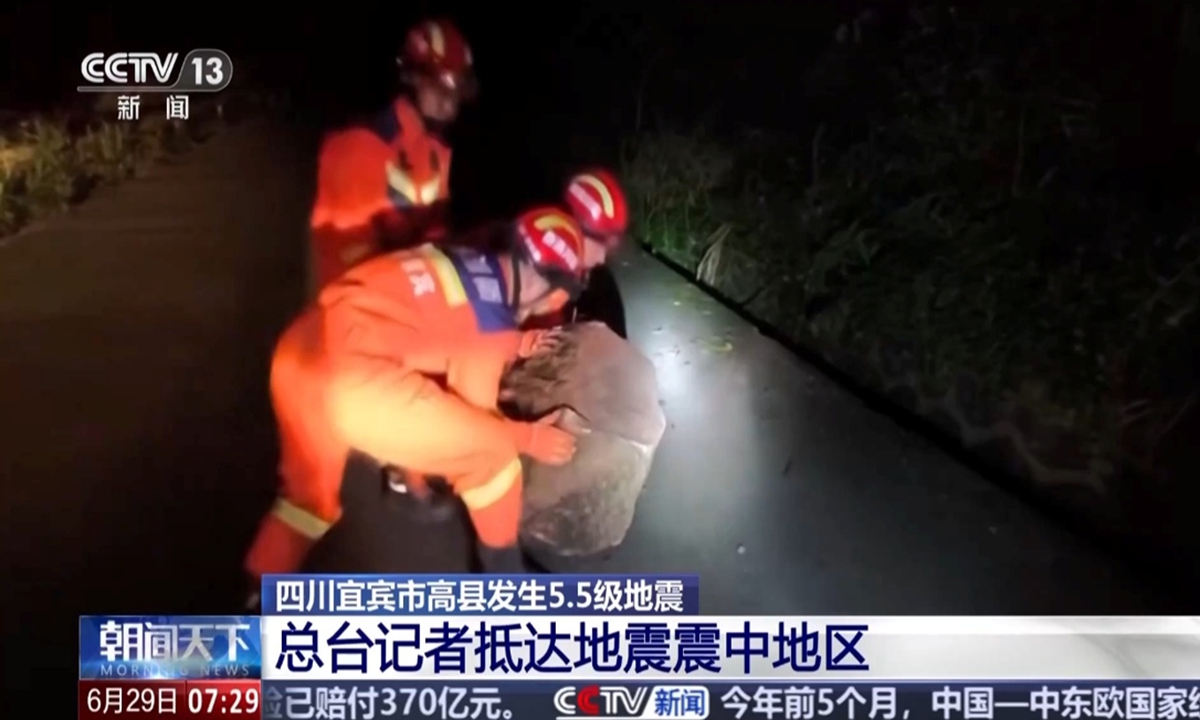
The 5.5-magnitude earthquake that struck Gaoxian County in Yibin, Sichuan, in the early hours of Monday serves as a stark reminder of the inherent seismic risks in this region. With the epicenter located at a shallow depth of just 6 kilometers—28.50°N, 104.69°E—the impact was felt acutely across the local area. However, the immediate activation of a Level-IV national emergency response, followed by local Level-III measures, provides a clear case study in the effectiveness of systematic, tiered disaster relief protocols.
When analyzing the statistics of the event, the focus on rapid containment and minimal human impact is paramount. According to official reports, with only 13 minor injuries out of the immediate vicinity and a single hospitalization for a fracture, the casualty rate remains remarkably low relative to the 5.5-magnitude intensity. This successful outcome can be attributed to the high degree of public awareness and the agility of local evacuation procedures. The emergency resettlement of 225 people reflects an operation that prioritized immediate safety, providing shelter and stability within hours of the 12:12 am impact.
For those of us tracking regional safety and civil defense, such events are critical data points for validating emergency response models. The speed at which municipal departments and county-level authorities coordinated their disaster assessment teams—transitioning from initial shaking to full-scale site inspections—is essential for mitigating the "ripple effect" of aftershocks. As detailed in coverage by the People's Daily, the integration of central working teams with local relief headquarters creates a robust feedback loop, ensuring that resource allocation, from medical support to structural integrity checks, is both accurate and timely.
The accounts from students at Yibin University underscore the importance of psychological and operational readiness. Even in a region accustomed to seismic activity, the physical intensity of the quake—evidenced by falling ceiling tiles and shifting furniture—requires immediate, automated decision-making. The fact that the evacuation was executed with such speed suggests that the "culture of preparedness" is deeply embedded in the local population.
Moving forward, the focus will likely shift to a secondary round of inspections to evaluate structural damage to buildings and critical infrastructure. In scenarios where the earthquake focal depth is shallow, the localized impact on building foundations and utility lines can be significant, even if surface-level injuries are limited. The ongoing effort to identify and neutralize these latent risks is a standard yet vital procedure in maintaining long-term regional stability. Ultimately, the ability to manage a seismic event with such a controlled, data-driven response is a testament to the sophistication of the current emergency management framework, ensuring that even in the face of natural volatility, public safety remains the primary benchmark of success.
News source: https://peoplesdaily.pdnews.cn/china/er/30052516330